Too much responsibility?

Talking about life and how we’re living it, the concept of responsibility comes up fairly often (Notes One), alongside that of freedom. What are we to make of all the freedom, all the choices, modern life’s laying at our feet? How much do we understand the meaning of each decision we’re faced with – where they may lead; all the social or environmental ramifications we’re setting in motion; the bigger picture everyone’s part of?

But then, is life now too overwhelming to be thinking that way? Between the relentless, often quite meaningless, demands for attention that form this constant tide of all that’s seeking to undermine our worth, agency or focus while locking us into predictable patterns of consumption, where are we to start exercising the responsibility of freedom? Maybe this much freedom’s simply too much to manage, in a way (Notes Two).

Much as we might care about all our disparate, important concerns, it also seems the paths for dealing with them aren’t quite there – that there’s simply not space, agreement or certainty over how best to address what we’re facing (Notes Three). Without tried and trusted courses of action, we presumably also carry the daunting burden of needing to “create” solutions.

How can we handle that level of freedom or responsibility? Who are we to turn to for wisdom, insight or guidance in charting a path through this modern landscape? So many of the voices speaking into our uncertainty seem to have other agendas nestled somewhere between the front and back of their minds about where things are headed or how they might benefit (Notes Four). Behind it all, where is reliable support to be found?

And, even if we were to become convinced of another way, can we just “drop” all this and do differently? Maybe we can. There’s certainly power to collective action; to ideas whose time has come and the people prepared to act in bringing them to life. Being sure of those ideas and the paths to their realisation seems so important, however. Choosing the right battles, the right stances to achieve our ends, doesn’t seem easy.

Sometimes it really just seems the responsibility of a modern life is potentially “too much” – that there’s too much wrong, too much that matters, too much well-meant advice for us to gain the focus needed to resolve it all. Simultaneously, that there’s too little time, space or clarity to pull all our many, valid concerns into any concerted form of response. Perhaps also, that we risk doing much harm while trying to do the right thing.

Is the challenge here to understand what it is to be human? The worth of all our lives, the value of our cooperation, and how that’s working itself out globally (Notes Five). Rising above ourselves to make good choices across the board, how much might the world change? In which case, once we’re convinced what we’re doing matters – holds value – maybe we’re simply right to persist until others can appreciate it too.

Notes and References:

Note 1: Responsibility in shaping this reality
Note 1: Passivity, or responsibility
Note 1: Questions around choice
Note 2: Life’s never been simpler…
Note 2: Making ends meet
Note 2: Is this the ultimate test?
Note 2: Things with life have to be maintained
Note 3: The value of a questioning attitude?
Note 3: Problems & the thought that created them
Note 3: What if solutions aren’t solutions?
Note 3: And, how much can we care?
Note 4: Trust within modern society
Note 4: Freedom, what to lean on & who to believe
Note 4: Which voice can we trust?
Note 4: Knowing who to trust
Note 5: Losing the sense of meaning
Note 5: Whether we make a difference
Note 5: Living as a form of art
Ways to share this:

Whether we make a difference

In all of life, doesn’t everything we do matter? Everything, eventually, touching upon others through the words, thoughts or actions we’re choosing. Isn’t it all rippling out in every direction to become part of everyone’s lives? We might believe or feel we’re of little consequence; but, in reality, it’s so far from true.

We always make a difference. So, bringing full attention to those choices might dramatically change the realities we’re all living with. If, instead of carelessness or self-interest, we acted on compassion or love, wouldn’t that ripple out into the world? Potentially, sweeping others along with it.

It’s fascinating to consider the nature of reality: ways things join together in chains of causality or complacency; ways attitudes or actions spread so contagiously; how that might shift things one way or another (Notes One). It seems undeniable we all play a part in it; whether or not we’re being deliberate.

All we do serves as an example, a validation, an encouragement, a challenge – creating impacts and setting standards within our increasingly wide social environment. These days, where little remains hidden and everything’s interconnected, isn’t it time we awoke to that potential?

It can’t be easy making a difference, though. Waking up within these complex, fast-moving systems and trying to find our way within them must be breaking new ground? Where can we find proven ideas for how to broach this? No human ever having lived within these conditions, any strategies can’t actually be tried and tested (Notes Two).

And there’s so much to care about in this world; so many issues we’d rightly feel inspired to fight for. In every area there are important battles to be fought around “what it means to be human”. Modernity wraps its tendrils throughout our lives; challenging us to uphold what matters and discard whatever’s working against it.

Within that, living alongside one another can seem almost indescribably hard. While we might not always agree – often, over issues that truly do matter – could there still be space on the edges of us to accept others as they are while holding to those higher values or perspectives that may be needed? What do we achieve when we don’t make that space?

Tolerance may never be easy: allowing something we disagree with to exist in our presence, unchallenged. And, with choices said to define us, it’s perhaps inevitable our lines of identity become points of conflict: if self is on the line, it’s almost natural we’d attack the opposing ideas that threaten us (Notes Three).

Giving people space to work out their thoughts without insisting on our own begins to seem a surprisingly generous attitude. Especially when there’s so little time for hearing others out or discussing things in all their fullness – when we’re squeezing meaningful communication into stolen, passing moments.

Can life happen that way, or only this distracted, half-finished echo of it? So, while everything matters, carving out time or space – physically or psychologically – to do it justice sometimes seems an impossible task.

Notes and References:

Note 1: One thing leads to another
Note 1: All we want to do passes through community
Note 1: Is this the ultimate test?
Note 1: Questions around choice
Note 1: This thing called love
Note 2: Would we be right to insist?
Note 2: Imperfection as perfection?
Note 2: Problems & the thought that created them
Note 2: Doing the right thing, we erase consequences
Note 2: What if solutions aren’t solutions?
Note 3: Letting people change
Note 3: Education as a breaking away?
Note 3: Thoughts of idealism and intolerance
Note 3: Authenticity & writing our own story
Note 3: Making things up as we go along

Ways to share this:

Beauty and wonder in nature

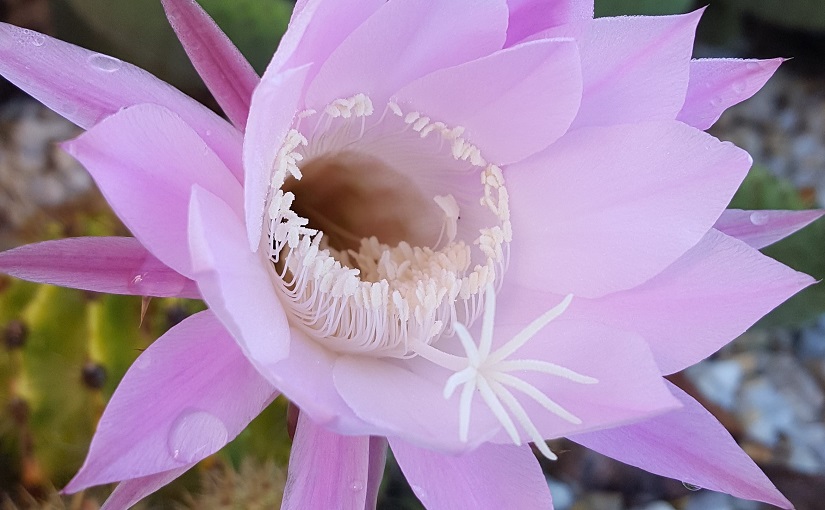
Isn’t nature quite simply incredible? All the innate intelligence and breath-taking beauty of its forms, formulations, colours, patterns and behaviours. The world’s offering this impressive picture of harmonious integration that, unfortunately, stands in fairly harsh contrast to our own way of being. Why is it we find such balance so difficult to achieve? Let alone the beauty.

It just seems truly amazing how much diversity, colour and innovation exists out there: the intense or subtle shades found in plants; the complex structures and gestures as each specimen charts its path to fruition; the strange, unspoken wisdom of creatures coexisting in seemingly perfect self-regulation. Being surrounded by such creativity is pretty astounding, really (Notes One).

It’s almost too easy to discount it all. To dissect, intervene, and gain all the knowledge we’d like without too much thought for what’s going on without our involvement. Nature’s beavering away at these blossoms with depths of colours we couldn’t imagine and animals with secret, interconnected lives we’re barely aware of. Beyond that, there’s the fact it’s cosmic realities and rhythms bringing it all to life.

Being encompassed, held, supported by living systems that aren’t only aesthetically but also scientifically valuable seems such an incredible place to call home. Nature’s formulas can help us treat diseases; develop materials that perfectly marry form and function; and feel humbled by all the lifeforms containing more effortless perfection than we can currently manage.

Doesn’t nature offer us – among many essential things – a wonderful example of how to live? It achieves this self-sustaining balance between its parts that’s not only highly productive but also too magnificent for words. Isn’t beauty all around us? In the weeds growing up through the sidewalks; the birds living out their dramas above our heads; the whales swimming deep through the oceans.

We might, quite casually, label this as “nature” and get on with our lives, but sometimes it seems so important to step back a little and see it for what it is. Aren’t we completely dependent on this? So much of our food, shelter, resources, comfort, and inspiration comes from nature – from the lapping waters, stately mountains, silent forests, streaming sunlight, and exquisite beauty of whatever flower’s blossoming on any given day.

All this goes into sustaining human existence; and, while we’re not the ones directing it, it’s nevertheless the foundation on which civilisations were built. Haven’t we generally drifted towards good access routes, reliable water sources, or the abundant raw materials we industriously turn to our advantage? Haven’t our lives, throughout all time, been constructed around and shaped by nature’s realities?

Is it foolish – childlike – to see things that way? To see life as a beautiful complexity that’s hard for the mind to grasp or ego to settle within. To view our position as both powerless and precarious: the humility of dependence and hubris of attempting to master it for ourselves (Notes Two). As if nature’s this amazing gift we’re still struggling to understand, relate to, and work alongside more respectfully.

Notes and References:

Note 1: Living as a form of art
Note 1: Aesthetic value of nature
Note 1: Nature tells a story, about the planet
Note 1: Humanity & creative instincts
Note 1: The real value of creativity?
Note 2: Nature speaks in many ways, do we listen?
Note 2: Having a sense for being alive
Note 2: Things with life have to be maintained
Note 2: Detaching from the world around us
Note 2: Intrinsic value of nature

Ways to share this:

Places of belonging & acceptance

Of all the books in life, perhaps one of the most beautiful I’ve ever read or will read is “Eternal Echoes” by the late John O’Donohue – “Exploring our hunger to belong” and, in doing so, capturing the poetic essence of all it means to be human.

Isn’t it true that “Everyone longs for intimacy and dreams of a nest of belonging in which one is embraced, seen and loved”? Also, that “Each one of us journeys alone into this world – and each one of us carries a unique world within our hearts”? This sense that “Each of us brings something alive in the world that is unique” seems such a beautiful, fundamental truth to keep in mind and somehow build our lives around.

Because, as O’Donohue explored, “Cut off from others, we atrophy and turn in on ourselves… A sense of belonging, however, suggests warmth, understanding and embrace… Our hunger to belong is the longing to bridge the gulf that exists between isolation and intimacy.” I often wonder how many of our personal and collective problems in life are essentially communicative – this struggle to be heard (Notes One).

How can we bring remote, scattered or isolated people into an understanding of “life” that encompasses us all? Now that our systems and travel habits are unquestioningly global – much of what we’re doing impacting so many others across the world – how can we grasp those realities and keep everyone who’s affected by it firmly in mind? It seems what’s required, if we’re to see humanity as one circle of belonging (Notes Two).

As O’Donohue says, in relation to modern life, “Consumerism propels us towards an ever-more lonely and isolated existence” and “although technology pretends to unite us, more often than not all it delivers are simulated images that distance us from our lives.” Written slightly before the dramatic transformation those strands of modernity brought to our lives, it’s fascinating to consider how he might’ve described things today.

Given the many challenges we’re all facing within modern society, it seems so important to grasp the underlying sense of what it is to be human – what we truly need to feel our lives are valued, purposeful, meaningful in the eyes of others. Technology might well make our lives “easier”, but if that’s coming at the cost of true understanding and connectedness it seems a high price to pay (Notes Three).

In reality, every sentence of this book deserves to be quoted; which seems to imply it’s simply a wonderful reflection of the value of our inner lives, the validity of our struggles, and the importance of grasping (and, holding onto) what makes us human. Then, ensuring that those essential qualities aren’t allowed to just be swept away or misdirected within all the fast-moving insistence of modern living (Notes Four).

Seeing life in terms of dislocated souls seeking belonging might make sense of many things; so, I really couldn’t recommend this book more highly for offering a fresh, beautiful, yet powerful perspective on our existence.

Notes and References:

“Eternal Echoes. Exploring our hunger to belong” by John O’Donohue, (Bantam Books, GB), 2000 (originally 1998).

Note 1: Going towards the unknown
Note 1: Does being alone amplify things?
Note 2: True relationship within society?
Note 2: Do we know what stands before us?
Note 2: What it is to be human
Note 3: Trust in technology?
Note 3: The insatiable desire for more
Note 3: Detaching from the world around us
Note 3: Is this the ultimate test?
Note 4: Overwhelm and resignation
Note 4: Society that doesn’t deal with the soul
Note 4: Losing the sense of meaning

Ways to share this:

Society that doesn’t deal with the soul

With everything that’s going on in life, it’s strange to think no one’s really so concerned with what’s going on inside – our inner lives or, for want of another word, the soul. If we were to see all that goes on within us as significant, valuable and important, why is it treated as if it’s of no relevance or interest to society?

Isn’t it what we’re all living with? Our own memories, experiences, hopes and dreams. All those paths we’ve walked, people we’ve met, ideas we’ve entertained, and moments we’ve lived to this point. The perspective we’ve gained on life and expectations we have in mind about it must be a huge reality for every single person. From the human viewpoint, it’s perhaps all there is.

What do we have but our inner life? The ways society’s ideas affect us and make us feel about ourselves, others, and existence itself. The kinds of relationships we’ve tended to have, whether nurturing and life-affirming or something quite different. Isn’t everything we’ve encountered in life part of this inner landscape of lessons learnt, emotions felt, and habitual responses forged over time? (Notes One)

I’m not sure can we say that doesn’t matter, that we shouldn’t take things personally, when it’s conceivably all personal. Isn’t anything that deals with people “personal”? Any action, word or attitude that touches another can be seen as personal; much as we may claim it wasn’t intended that way. Everything that happens within society must – on one level – be personal in that it’s all happening to, for, by, or around people.

Yet aren’t we often being treated as mere physical objects? Interacted with on the abstract, hypothetical basis of ideas about “human nature” and how to “manage it” within modern communities. As if, in order to cope with this way of living, we reduce others to being simply concepts of humanity – not quite acknowledging them as real people so we can make it through the day.

Of course, there is a lot of overwhelm to modern life – this constant inundation of new information, hefty emotional content, and the difficulty of brushing up alongside relative “strangers” in both physical and virtual reality (Notes Two). Faced with that, it’s perhaps “natural” we prioritise managing our own lives and what matters most to us, rather than worrying unduly about everyone around us.

Which seems to mean no one’s really that bothered about soul, about the bigger human picture of how this is coming together. So, we’re treated fairly coldly; picked apart quite callously by industry calculations; pushed around almost carelessly by culture’s critical judgement. An “each to his own” mentality that seems, sometimes, to forget we’re all human with inner lives that matter (Notes Three).

While it seems impossible to actually deny the richness and beauty of the human soul, as captured within culture, philosophy or thought; it also seems we’re living in ways that aren’t fully taking into account the real value and significance of all our conscious experiences of existence.

Notes and References:

Note 1: Personal archaeology
Note 1: Complication of being human
Note 1: Problems & the thought that created them
Note 1: Going towards the unknown
Note 2: Overwhelm and resignation
Note 2: What’s the idea with culture?
Note 2: True relationship within modern society?
Note 2: Mastering life’s invisible realities
Note 2: Attacks on our humanity
Note 2: Is this the ultimate test?
Note 3: Absolute or relative value
Note 3: Treating people like sims?
Note 3: Where do ideas of evolution leave us?
Note 3: What it is to be human

Turning to those who are, in various ways, attempting to address the inner life, there is Literature that’s treating the soul.

Ways to share this:

Making ends meet

When we talk of making ends meet, it’s often a statement related to individuals: how well we’re balancing desire with capacity and finding the financial resources to square away all the essential items that make up our lives. Beyond that, though, isn’t it also a description of society? A sense of how well personal and collective interests marry up into a workable whole.

Our personal lives clearly have a long list of requirements: shelter, warmth, food, clothing, transport, entertainment, technology, growth. All we need – or feel we do – in order to participate within society as worthwhile, respectable citizens. Don’t many of those things, and how we’re going about them, effectively become our identity, our sense of status or of self-worth? (Notes One)

At its most fundamental, it’s presumably a picture of everyone feeling healthy, cared for, and motivated to engage productively, constructively and responsibly in making things work. That, from this foundation of balanced preparedness – all our essential physical, emotional, psychological needs having been met – we’re in the position to participate in social realities with the secure, firm footing of personal independence.

I would’ve thought that’s what we’re looking for with society: people being able to stand on their own and respond to life from that place of calm self-assurance. But, these days, it really seems such security is difficult to find. Everything changing so quickly, the psychological – let alone financial or mental – demands placed on everyone to “keep up” are perhaps impossible to meet (Notes Two).

Progress is funny, then, in that we seem the one’s funding it through buying these things, yet the minimal standards required to keep up with it all must be a huge burden – all these new products to evaluate, learn about, and somehow find money for. Markets might have a lot of good things going for them, but sometimes it seems the quantifiable stress and waste it’s all generating could outweigh many supposed benefits.

It’s almost as if industry runs ahead – fuelled by the desire for profit, excitement of competition, or ingenuity of our finest minds – and we’re all chasing the tail of trying to catch up and be whatever a modern human’s supposed to be (Notes Three). Like this artificial conversation spun out above our heads, speeding ahead of anything the human mind can truly comprehend or piece together into a meaningful whole.

It’s interesting to consider the impact it’s all having. Because, industry has its “ends” – it’s targets and sense of where things are headed. This commercial vision of a better world that’s harnessing our power of invention to rework the idea of human life, society, and our position on this planet. Working on those levels, the scope this has for reshaping our lives is potentially limitless.

And, within it all, live the humans trying to tally up our hopes for life with the space this world has in mind for us. How well we’re currently balancing genuine human needs with these other, commercial ones can be a strange thing to contemplate.

Notes and References:

Note 1: How we feel about society
Note 1: Things with life have to be maintained
Note 1: Attacks on our humanity
Note 1: This thing called love
Note 2: What’s not essential
Note 2: Freedom, what to lean on & who to believe
Note 2: Goods & the wisdom in scarcity
Note 2: The insatiable desire for more
Note 2: Letting go of “who you are”
Note 3: Those who are leading us
Note 3: Do we really need incentives?
Note 3: Treating people like sims?
Note 3: Life’s never been simpler…

Thinking about how we got here, One thing leads to another mused over paths the West’s taken and where we now stand.

Ways to share this:

What if solutions aren’t solutions?

What if, despite all our finest efforts and ideas, we don’t yet have the answers? If, looking to either past or present, the plans we dreamt up and systems we’ve set in motion simply don’t lead where we thought they would? Perhaps they even create further problems or unintentionally compound the ones we’ve been struggling to resolve. Isn’t it possible that our understanding might’ve gone off-track in deeply significant ways?

If so, we might throw all our energy at things and never achieve what we hope; forever frustrated at the constant re-emergence of new, old or simply different problems. It could be we’ll spend years unpicking and redressing our problematic solutions. Because, if we’re not on the right path or looking at situations the right way, how can we expect our answers to be the right ones?

Could it be that we’ve taken a few left turns and shifted the conversation to places we won’t ever find truly suitable solutions? Drifted into looking at “how things are” slightly askew – from the wrong sort of angle to see where they fit or the path out of it all to something better. Don’t we need to see and interpret things correctly if we’re to be in the position to find answers? (Notes One)

But then, is it worth thinking that way or is this the kind of existential doubt that’s best left alone? Isn’t it better to “know” than plough on with subtle or dramatic misconceptions of reality? Isn’t our understanding always worth pulling into question, just to be sure we’re not digging holes we’d rather be getting out of?

Maybe it’s a depressing thought; but it might also be inspiring. It’s almost a relief to think that none of the ideas we’ve been throwing around are actually capable of containing the human spirit – bringing out the best in us, discouraging the worst, letting everyone contribute all they’re able and no one hoard more than they personally “need”.

If everything on the table’s still imperfect, then seeing our thinking as potentially flawed or incomplete could perhaps help awaken more open-mindedness. It’s the kind of realisation that could serve as a prelude to more deliberate re-engagement in forging the kind of life we’re all looking for (Notes Two).

Might we not choose to live forever delving deeper into the nature of the human and the world? In a state of seeking greater understanding and constant improvement; of things being flexible and responsive, rather than set in stone; society shifting around us in a beautifully choreographed dance of “life” as we all play our active role in making it “work”.

We so often look at “problems” and propose confident solutions, but what if they’re not? What if anything logically carved out and imposed, instead of intrinsically lived, is destined to fall short? We might seek clear, conclusive, lasting outcomes from relatively short-term projects – hoping to resolve everything once and for all – but maybe life’s more of an ongoing game of insistent awareness and creativity.

Notes and References:

Note 1: Caught in these thoughts
Note 1: Is this the ultimate test?
Note 1: On whose terms?
Note 1: Which voice can we trust?
Note 1: Ideals & the pursuit of them
Note 2: What it is to be human
Note 2: Authenticity & writing our own story
Note 2: True relationship within society?
Note 2: The idea of think globally, act locally
Note 2: Losing the sense of meaning

Finding honest, constructive ways to address life’s many powerful contradictions was also the focus of “Minding the Earth, Mending the World”.

Ways to share this:

Going towards the unknown

Of all the things that exist in the world, how many can we say we already know and understand? And, how many of those ideas we have in mind could we claim to be completely true and flawless? It just seems the world’s so vast, so full of different ways of seeing and interpreting the realities we find around us – how could we ever say our knowledge of it is now complete?

These days, however, it seems we’re often told knowledge is easy: it’s at our fingertips, and even children will confidently proclaim they understand things far more complex than many adults truly have a firm grasp around. We’re wielding logic, facts and conclusions as if life’s simple with everyone in agreement on how we’ll interpret it all.

In reality, though, aren’t words still open to interpretation and their meanings subject to ever-shifting definition? Any form of communication perhaps always being a case of somehow managing to convey what we mean and establish agreement around every term we’ve used along the way (Notes One). When our worlds were more limited it may’ve been that meanings were commonly held, but it’s not seeming so true now.

Words, after all, are simply representative of our ideas – standing in the place of complex, integrated, ever-changing realities. Now that all our experiences of reality are being pooled into this one, virtual conversation, how are we to claim the words we’re using carry the same meaning at the point they’re received? Can we be sure of having communicated effectively if our intended meaning never reached the other’s mind?

What I’m trying to say is, communication’s far from easy. There are so many grey areas, projections and preconceived notions around what everything means. And now there’s so little time, so many people to talk to, and so much at stake it’s not looking to get any easier. Hasn’t communication generally been one of humanity’s bigger problems? Finding ways to share understanding and reach agreement having, perhaps, taken up most of our time.

Maybe there aren’t that many people who truly “are” skilled at communication? At conveying ideas, explaining perspectives, exploring differences, listening openly, letting others reach their own conclusions about where they now stand. Isn’t it essentially a question of how we’re approaching things? Things meaning people, experiences, ideas, beliefs and attitudes. Whether we’re tolerant of diverging viewpoints, or not. (Notes Two)

Often now, everything seems like a battle; people and their ideas, something to defeat or eliminate. What does it mean to make “conquering” part of how we relate? To judge, attack, belittle, sweep aside or downplay the thoughts and experiences others have in mind. What would it mean, instead, to approach people with attitudes of openness, curiosity and acceptance? Perhaps, even, to approach life and knowledge itself that way.

If much in life, despite what we might think (Notes Three), is truly unknown at this point, how we go about forging relationships with all we’ve not yet come to understand is perhaps crucially important.

Notes and References:

Note 1: Social starting points for modern ways
Note 1: Tone in public dialogue
Note 2: Tempting justifications of self
Note 2: Humans, judgement & shutting down
Note 2: Thoughts of idealism and intolerance
Note 3: Convergence and divergence
Note 3: Is anything obvious to someone who doesn’t know?
Note 3: Seeing, knowing and loving
Note 3: Knowing who to trust
Note 3: Spirit as the invisible

Ways to share this:

What’s the idea with culture?

Looking at life, large chunks of time seem to be immersed in what’s called “culture” – all the shows, movies, podcasts, literature, productions, songs and performances that, grouped together, become this world of stories we tell, voices we listen to, and experiences or characters we’re letting populate our minds. It’s fascinating, really, because what does it all mean?

It’s not quite reality, but seems related to it and considered worthwhile as an activity. Is this to help us understand life, society, and the relationships we stand within? Is it intended to inform us about the nature of our world and kinds of attitudes that might serve well in navigating it? A sidebar within “real life” where we can safely learn essential lessons.

Almost this condensed version of reality, offering what we’d eventually figure out ourselves by way of living. Following others’ examples or learning from their mistakes; seeing things portrayed and exploring values people might choose to live by; developing this common “code” for what’s deemed admirable, dangerous or justifiable presumably lets us see our community’s thinking more clearly.

All these masks and metaphors through which social meanings are communicated – a valve or flow of ideas, reflections and estimations of the worth we might hold in others’ eyes. The ways things are presented perhaps subtly shaping our own thoughts about life and filtering out into the conversations, interactions and relationships of the real world (Notes One).

Isn’t it true there’s this two-way flow, this reciprocity between culture and reality? It’s where we might find ourselves, our options for expressing who we are from within the definitions on offer. It gives us this shared sense of what those choices mean – how we might or must interpret the image and behaviour of others. This sense of deciphering where each person stands within our collective narratives.

Within all that, there seems a lot of scope for influencing both individuals and society. If we’re “reading” the world around us – and, acting within it – based on what we’re experiencing culturally, there’s this sense in which culture’s doing this constant dance of forms and meanings with the society it purports to serve. Isn’t the hope that, somehow, a community will operate “better” as a result of all this?

But, these days particularly – with the opportunities technology offers and inclination to capitalise on any given trend – it’s seeming questionable where things are headed (Notes Two). If culture’s a sort of mirror that sets itself up to reflect our realities while also distorting or adding something to them, how responsible are we being with all we’re taking in and making our own?

If these are the references we’re allowing in to shape how we’re living and interpreting the world (Notes Three), can we really not consider where they may lead? We might look to culture for the latest trends or conversations, forming our sense of identity and belonging around what we find there, but letting too many of these things trickle out into society, unfiltered, doesn’t exactly seem wise.

Notes and References:

Note 1: Culture as reflection
Note 1: Culture as what we relate to
Note 1: Definition, expression & interpretation
Note 1: Culture as a conversation across time
Note 1: Stories that bind us
Note 2: Economics & the realm of culture
Note 2: All that’s going on around us
Note 3: Reading into social realities?
Note 3: Making things up as we go along
Note 3: Do we know what we’re doing?

For some slightly more timeless thoughts around the question of culture, there’s Plato & “The Republic”.

Ways to share this:

Is this the ultimate test?

With everything that’s going on these days, it’s fairly tempting to predict that we’re pretty close to “ruining” what we have on this planet – the chance at living. If harmonious coexistence with one another and the life-systems of the natural world are essential factors in ensuring our survival then, given how we’re doing on those fronts, things aren’t seeming entirely hopeful.

It’s just interesting to contemplate all the insight we now have, all the power to shape our future, yet all the rabbit holes we’re being drawn into that might easily threaten any stability that remains (Notes One). It’s incredible how greatly things have changed in the last hundred years or so; and, how quickly we seem to be starting to see it all as normal.

Isn’t “normal” a sense of relationships, meaning, engagement, causality? Having a realistic understanding of where we stand in life and what all of our choices, thoughts and actions really “mean” for the world and every living creature within it (Notes Two). Isn’t “that” the picture of normal, healthy, sustainable existence – the perfect example of which perhaps being that of nature, before we overstepped our boundaries.

Where, then, do we stand now in relation to the world around us? How aware are we of all our lives depend upon and all that our decisions – conscious or otherwise – are bringing into effect? Modern life, in so many ways, is demanding so much more of us. Much as the assistance of technology is superficially making our lives easier, the ramifications it has for us all, individually and collectively, are incredibly difficult to quantify.

If life’s a question of knowing ourselves – who we are, our worth and relationships – and interacting wisely so nothing valuable is lost and everything essential is allowed to remain, how are we to establish that in the face of these challenges? And how much, at this point, is effectively the human psyche run amok over the planet? Our greed, insecurity or intolerance stretching out to make themselves felt the world over.

In a way, modern life seems to be testing us on every level: throwing every conceivable temptation or distraction our way; hiding traditional forms of regulation, such as consequence or social scrutiny; pressing all the buttons guaranteed to drive us crazy with anger or despair. Isn’t this unrelenting demand for awareness and presence of mind asking something more of us all?

But then, evolution’s arguably “always” a question of how best to move forwards. Can we do so by becoming dependent on externalities; letting the “ease” of life now blind us to its inevitable complexities; feeling the justifiable uncertainty of no longer understanding our lives or precisely what they mean? How do we stand against “all this” and become more human, not less? (Notes Three)

Of course, it’s not at all easy to encapsulate the challenges modern life’s presenting us with, let alone agree on ways of addressing them. But can we afford not to try guiding things in slightly more life-affirming directions?

Notes and References:

Note 1: Power and potential
Note 1: Mastering life’s invisible realities
Note 1: Life’s never been simpler…
Note 2: Any escape from cause & consequence?
Note 2: How do ideas find their place in the world
Note 2: Things with life have to be maintained
Note 2: True relationship within society?
Note 3: Problems & the thought that created them
Note 3: Losing the sense of meaning
Note 3: Imperfection as perfection?
Note 3: Questions around choice
Note 3: Cutting corners

Ways to share this: