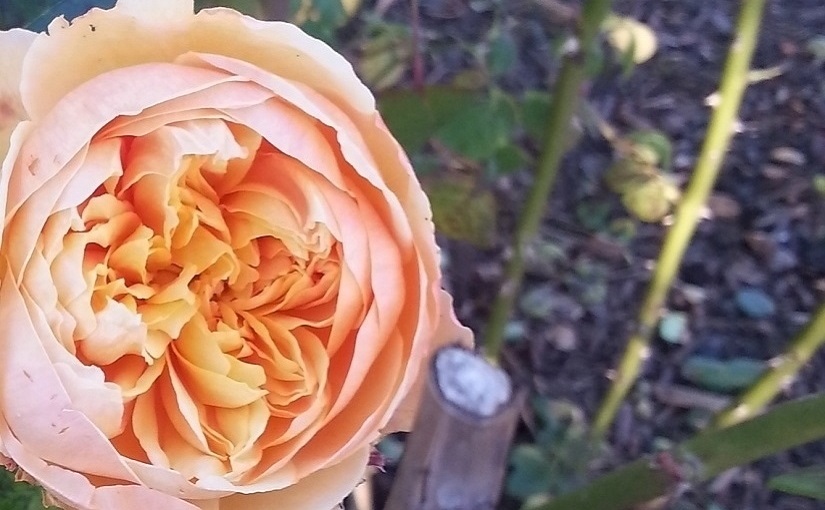
What do we see in beauty?

What’s probably becoming clear is that I question quite a lot of the cultural or social attitudes of our times and, to be clearer, when I do so it’s more to stretch out the conversation in an attempt to provide space for re-evaluating things. In that light, today’s topic is beauty.

I talked a little in Age, Image & Self Worth about the correlation between outer appearances and inner qualities, and that’s pretty much my starting point here. Then, I spoke of beauty being mainly associated with youth and how the notion of beauty as we age may lie more in the realm of truthful resonance between the inner self and the outer form we offer the world.

However, we live in a society which embraces more superficial ideas on beauty: concealing imperfections or signs of time, creating illusions with makeup and fashion, asserting our individuality through consumer choices, praising and rewarding those blessed with looks coinciding with current trends. This isn’t said dismissively, none of this is necessarily bad and much of it seems part of shared culture and meaning.

My main concern, as touched upon in Relating to cultural benchmarks and How many aren’t well represented?, is the extent to which it’s wise to assess people’s inner worth based on such external markers.

There’s a book by Edward de Bono called “How to Have a Beautiful Mind” which starts from the premise that inner qualities are more lasting, more important to cultivate than the pursuit of externalities destined to fade or alter. I do wonder to what extent that’s true in today’s society – it seems superficial concerns can get you a long way in our fast-paced world of image, aesthetic, branding etc. Honestly, I see very little motivation today for people to develop character and inner beauty.

It’s something I imagine we’re aware of from a young age. For some reason we often seem blinded or caught up in the beautiful, losing sight of other factors. There’s certainly an ‘unfairness’ there, but I think it’s one we accept and perpetuate in many ways.

I could argue beauty is often inverse to character: that those blessed in this respect are even less motivated to develop inwardly as others tend to defer to them and desire their presence regardless. But I imagine it may well be a double-edged sword: to be treated favourably without needing to make effort, possibly having your wisdom ignored in the process may be a burden for the beautiful.

For me, appearance – be that looks, age, belongings, or whatever else – doesn’t register as much as the way a person is, how they relate, the ideas they hold and their willingness to share them, to listen, to care, to change their mind. Sometimes that correlates to looks, sometimes it doesn’t – some people are just beautiful souls, and that shines through regardless.

Ways to share this:

Community – what it was, what we lost

I began talking about this topic in The challenge of community, and here I want to return to the idea of how community has changed over recent times.

Some of these ideas arose in considering Jane Austen’s “Pride and Prejudice” – how society was more closely knit and qualities of character had consequences for yourself and those around you, how behaviour and personality were noticed and affected your life. Also how economic activity and your place in nature were clearer, as trade was more locally evident and transport more closely related to environment.

Then how our immediate realities seem to be becoming increasingly irrelevant as we travel further and use methods more removed from reality; consume culture online or in isolation; and so much of life has become quite virtual and interlaced with the use of technology. The relationships between self and environment seem less apparent, more avoidable, as we can tune out from so much or manage it remotely.

Focusing on social aspects, it seems we sometimes prioritise communication and validation from virtual connections over those in proximity to us. Possibly disregarding uncomfortable realities and going where someone will approve and empower us. We seem to drift towards those who agree, where before we ‘had’ to work through our relationships with those who were there. I imagine that made for very different social realities.

Where is the learning now, where is the shared meaning and construction of reality? Or are we all wandering around isolated and unchallenged, not pushing through with difficulties in understanding or relating? Choosing our own perspective.

Looking back at the recent festive season, it seemed there was a lot of ‘living in the hype’ of cultural traditions (heart-warming movies and songs, idealised images of society and family life etc.) but then almost a hatred and intolerance of the realities of sharing time and space with others. As if we want the illusion, the mask of that community without quite being able to create it.

Touching back on Jane Austen, that sense of personal qualities and character mattering – how people managed relationships and carried themselves within their communities. Now it seems we can avoid many of those challenges and disregard the social reflections of our environment, creating our own little worlds.

It seems community reflects reality in a way: social identity used to be shaped by the relationships of community; meanings and truths about human activity and our place in nature were evident in how we lived. Now, maybe community reflects our disengagement and distraction from those realities – what would it take for us to focus our energies on developing community once again?

It’s interesting to me how something that was once so tangible and influential has become something quite different. How the place of the individual in environment and social context has changed so much, and how we can find new ways of working with these realities.

Ways to share this:

How many aren’t well represented?

The initial impetus for this post was in reading about disablism and cultural representations of disfigurement, topics I’d not been aware of but found deeply concerning (e.g. this Independent article on Hollywood villains). This led me to thinking more broadly about people within society who aren’t represented positively and attitudes that may arise from that, which is what I’ll write about here.

To my mind, it seems our cultural conversations – be that films, television, books, or other forms – represent looks so as they mean something, and these media images then become the world of meaning we inhabit and relate ourselves to.

Western culture creates these standards of appearance, style, behaviour, values, character which seem to place many at odds with images they can likely never attain and may not want to. Indeed, are the faces of our cultural life meant as a reflection or a battleground? Who decides the options we’re presented and the meanings they hold?

Maybe that’s always been the way with culture: that society creates representations of reality, assigns meaning, and plays out social options, masks, qualities and relationships in order to give rise to discussion about our values, concerns and ways of living.

However, for this to spill over into our everyday attitudes so we begin judging those who may not value ‘fashionable’ clothing or the endless illusions of makeup seems a mistake. And that doesn’t even touch on the disturbing attitudes towards disfigurement or disability (topics I don’t feel qualified to address, but feel need raising in this context). To infer conclusions about anyone based on outward appearances is troubling on a social level.

Ultimately I suppose it comes down to the question of what this process of cultural representation is all about. I referred to it above as a ‘conversation’ and maybe that’s helpful: if culture is the voice emanating from society, telling stories and using social realities as its characters and forms, then maybe we need to think about how we understand that and what our response might be.

How aware are we of the ‘codes’ used within culture, and do we keep these distinct from our attitudes in daily life? What is really being said and meant? Are our cultural institutions acting responsibly, intending to foster division, or working in consideration of other industries? Are we being presented with ideals we’re supposed to be taking out into social life or ones to work with in a more inward, symbolic way?

There’s clearly more to this topic than I anticipated, as this has delved into interesting questions around society, culture and identity. At its core, this seems to be about how culture relates to social reality, how we relate ourselves to culture, and the extent to which cultural forms are based on reality or allusion. Are these lines being blurred, pulling us into consumption and image-creation? Is culture where we find our selves or where we reflect upon them, possibly hone them? What’s behind it all, and what’s socially acceptable?

Ways to share this:

“Response Ability” by Frank Fisher

A few years back, someone introduced me to the writing of the late Frank Fisher and while this can be fairly academic compared with most of the texts I’ll be dipping into here, its rigorous and lively thinking strives to connect with the challenges of modern life in such an important way.

“Response Ability” explores various issues (environment, energy, transport, illness) alongside the process of “social construction” as a way we can come to understand the structures we create together; the essence of “response ability” then being for the individual to begin an active, intelligent engagement with living.

The section on “Technology and the loss of self” raises some interesting concerns that may be worth getting our head around. As its starting point, technology is taken as “an expression of purpose which may or may not be clear to its users”. Fisher then goes on to outline the ways design and social context exclude us from “the meanings (workings) purposefully, i.e. known to be, built into devices”.

Here we are talking about the way technology is created, marketed, maintained and how the face presented to us is one we cannot fully understand but one we relate to in a way somewhat distanced from the realities and meanings nested there. For example, the differences between the control and understanding of a manual car, versus the ease of an automatic; or the reliance on specialists as technology becomes increasingly inaccessible to everyday comprehension.

Using technology without seeing all it entails has the “capacity to trivialise both our understanding of nature and the meaning of the relationships we have with it”. Through a discussion of the nature of self, language and the construction of meaning Fisher then draws us to an understanding of how “meaning arises in recursive interaction between people in language” and “self and selfhood arise in the development of meaning in an individual”, so “where our access to meaning is restricted, our access to self determination, the means to construct our selves, diminishes.”

As I said, this is quite academic, quite deep. But for me, the essence of what’s being said here is that meaning and self arise out of a process of communication within society, so by technology mediating certain relationships we risk losing that feedback, and therefore our capacity to personally understand and respond in an informed way.

It seems Fisher isn’t so much critical of technology itself, but concerned over the degree of understanding of the subtle ways it distances us from nature/reality: “In addition to knowing ‘how it works’, we must know conceptually how it ‘fits’.” These tools arise out of a culture, and in using them we must understand them otherwise we risk being limited by their design. We must understand what we are doing, how we are doing it, and why.

This has clearly been a heavy post, and it’s been challenging to write, but that’s why I’ve stuck with it – if the realities behind technology and our relationships with it and with the world around us are that complicated to grasp, should we abandon the effort? If what’s really at stake is an understanding of self and our relationship to reality, then it seems troubling to shrug such concerns off.

Rather than being swept along somewhat unthinkingly with the tide of progress, we need to be aware of what we risk – to do so more consciously, more intentionally. To assert our selves, our humanity and insist on more transparency, meaning, and social context in what technology helps us to do.

Reference: ‘Technology and the loss of self’ from Chapter One of “Response Ability: Environment, Health and Everyday Transcendence” by Frank Fisher, (Vista Publications, Melbourne), 2006.

Ways to share this:

Hope as a force to lead us onward

Hope is this beautiful idea – hope can lead us forward, believing in what is possible, but it also leaves us open to disappointment if it’s wrongly placed. Without it, we’d be left thinking this is the only possible reality, that little or nothing can change.

We look at the world, we look at the individual, and both are almost undeniably flawed. We struggle to be all that we sense we can be, both on a personal level and more broadly as a society. Life seems a series of compromises as one by one our childhood ideals are broken or contorted. Our society doesn’t greet us and take us by the hand to work together for a better world, but seems to set us fighting one another for every rung of the ladder. Much of what ‘we’ do doesn’t really need to be done; it just creates profit or advantage on some level. Culture and advertising bombard us with unrealistic images, creating a market for these things and encouraging us to make personal comparisons (see Relating to cultural benchmarks). And with technology much is never forgotten, so that freedom to change seems harder.

At this point, the future of society – some say the world at large – is in the hands of humanity. So it seems we need to find some kind of hope there, in our ability to overcome what seems to be the inherent selfishness of “human nature” and create a better way forward.

This has headed in quite a bleak direction given the title of this post, but this is my point. Where can we place our hope? Can we believe in the potential of the human being? That to me is the essential question and many of the threads here I will be picking up again later this year. My earlier post Mental health relative to modern times also connects with this.

For me, despite all of the challenges and the darkness, I have deep faith in the human being, in our capacity to change and to connect with one another on the basis of the human condition we have in common.

I think the human being is the answer. We are undoubtedly the problem, but also the solution. Within ourselves it seems we must find the empathy, understanding, courage to cooperate and build a more human system that works for us rather than against, and respects rather than exploits the environment we depend upon.

And, for me, this is something we can start building on a smaller personal or community scale which also seems very hopeful.

Ways to share this:

Relating to cultural benchmarks

I was reading some articles a while back about how young adults are struggling with feeling themselves capable and ‘grown up’ given the seeming impossibility of attaining the ‘usual’ benchmarks of ‘successful’ adulthood: home ownership, stable marriage, career security, etcetera. This got me wondering about what these benchmarks actually are, and what they really mean about us. Does a career define you? Does your self-image or social life define you? Do your relationships, family, health or fitness define you? Or are all of these things expressions of you?

With benchmarks, I suppose they are events or standards that we tend to measure ourselves by – some have them, some don’t; some want them, others may not; some assign deep meaning to them, others find it elsewhere. In a way maybe we all evaluate our personal worth against the absence or presence of these things and our views on that. Maybe we struggle our whole lives to attain or make our peace with what was possible for us according to such reference points.

Naturally, they seem to be historical constructions carrying with them social and cultural meanings of the past. It seems marriage used to be this sign of social status, recognition, maybe a moral or personal affirmation or judgement. Also that career spoke something of your character, your nature, your standing in life, your values and concerns maybe. And home seems to have demonstrated success, priorities, the face you present to others.

I suppose the essence there is that all this was seen to speak of inner qualities and contain an element of truth about a person. With modern life, I’m not sure the extent to which that remains true. Does home ownership really say that much? It often speaks more of opportunity; and while many still see value in crafting a certain aesthetic to demonstrate to others, I’m unsure how much that says of their true nature. Does a career really tell you much about a person? Sometimes it might, often it seems more of a pragmatic choice or one endured rather than embodied.

In all these things, maybe they define us in some sense and allow us to form some conclusions about a person; but I don’t know how much meaning is really contained within that now.

If in the past these benchmarks genuinely told society something about a person – signs of inner qualities flowing out and finding a place in the world – then I can see how they held meaning. But if they no longer necessarily speak of a person’s true self in that way, what is the value in assigning meaning to the more superficial considerations that money can buy?

Maybe there’s a way to step back, re-evaluate things, and see each person as a valid expression of their character, interests, situation in life. Listening to how people relate themselves now to these benchmarks in terms of values and life opportunities may contain more truth about a person and how they engage with their choices in life.

Ways to share this:

Education, society & the individual

The subject of education has come up a couple of times so far and is of central importance in terms of the kind of society we are creating; for that reason, and in the light of Trying to understand our times and various other posts, it’s also a difficult topic to address.

Education, in principle, is the way in which we shape future generations – passing on essential skills and knowledge; sharing values, cultural artefacts, social realities; preparing individuals to find their place in our world. So clearly it’s under a lot of pressure in today’s changing realities, even without talking politics, statistics and accountability. It’s also the first point where government can really legislate on standards and address inequalities without interfering too directly into family life, and it seems a lot of complications arise from that direction.

So it’s a pretty important function, and also a pretty intense reality where everyone has their opinions and demands. More traditional folks fight to keep more classical elements, which some see as less obviously applicable to life; the economically-minded fight to prioritise qualities for the workplace; more spiritual, social or artistic types may prioritise a more human-centred, creative approach that allows individual qualities to flourish; others seem to advocate quantifiable scientific methods.

I wonder how all this appears from the child’s perspective – how they view the world into which they are being welcomed. It seems often there’s a disconnect between the organisation of the school and the realities of the family and of society; and if children hear a parent complaining at the expectations of the school – be that homework or discipline or other regulations – how does that affect the authority and respect of the teacher? Are we raising new generations to run the gauntlet between opposing realities? Is what we are doing, what we are imparting, important or something to be struggled against or belittled?

Teaching seems one of the more important, stressful, and derided professions in modern society – at the frontline between individuals and a troubled social reality of divergent opinions. Families are struggling, individuals are struggling, schools are struggling, society is struggling. Education and also Healthcare are two systems that seem to be feeling the pain of society most, as individual realities meet government functions. In both these I think the demands of our culture and society may be set against what is healthy and helpful on a personal or social level.

As I said at the outset, this is a challenge to address. Education is so tied into values, culture, reality, and hope. It’s where each individual finds and creates meaning, and comes to understand the world. It has to serve both the individual and society. It’s also an area of life where we struggle to be on the same page. It comes down to what’s important in life, what life is all about, and – as I’ve written in various ways – I’m not sure we have an answer to that yet.

Ways to share this:

Waste and consumer choices

I essentially want to look here at cycles within Western society in terms of economic and consumer activity. Starting from the root of the word as ‘household management’, I tend to view economic activity as housekeeping or the process of managing natural resources.

It seems bizarre how even fairly recently “waste” as we know it did not really exist. It seems that food was grown fairly locally and bought in its rawer, unpackaged state. Clothing and possessions were fewer and treated with greater reverence and care. Property was maintained and designed to last. Materials were generally natural and could be repurposed – wood, metal, natural fibres. Then suddenly we are all generating vast amounts of waste, and in forms that cannot be reintegrated into nature. It’s quite an incredible shift really, and surely one that must be actively sustained by standards within the business world.

As an aside here, the book “Cradle to Cradle” by William McDonough & Michael Braungart is fascinating and challenging in this regard; and this topic also links with my recent post on “Small is Beautiful” regarding our treatment of natural capital and the principles underpinning our actions.

I also find it interesting that we demean those who perform the ‘menial tasks’ within our system, such as maintenance or production, when to me there is a real importance in taking responsibility for the full reality of a situation. In maintaining something, you gain valuable insight into the material reality of our choices: Is something nearly impossible to maintain in its intended state? Does it require unnecessarily chemical products or time to clean? Does it age well or seem designed to do the opposite? To me, it’s one of the contradictions of our society that we embrace consumerism but do not want to look at the consequences and learn from them. We get someone else to sweep it under the carpet.

As with most things, I see a real truth behind all this – that we are not looking entirely consciously at the system we are embracing; that we are not fully taking responsibility for the less glamorous realities of how it all works. Yes, we can make all manner of things. Yes, there are few limits to what we can envisage and create. Except the material limits of our ecosystem, the human limits of social inequality, the ethical limits of the world we leave behind us. Hopefully once the excitement of material indulgence fades we will begin to look and act more responsibly in terms of how we manage these things and the full implications of the choices we are making.

Ways to share this:

“Small is Beautiful”

There are some books I simply love and this is one: “Small is Beautiful” by E. F. Schumacher. I considered writing this post purely on the tagline “A Study of Economics as if People Mattered”, but was won over by some of the ideas discussed in the first chapters.

In essence, the first chapter looks at our economic system and its treatment of ‘natural capital’ as a foundation we both eat away at and mistreat through our interference: “Modern man does not experience himself as a part of nature but as an outside force destined to dominate and conquer it. He even talks of a battle with nature, forgetting that, if he won the battle, he would find himself on the losing side.” Taking the natural environment as a given or as a system we don’t have a strong duty to understand and maintain seems so relevant to ideas and conversations being held today, given that nature is an “irreplaceable capital which man has not made, but simply found, and without which he can do nothing.”

At times it seems current debate gets derailed by trying to ascertain if we are directly responsible for climatic and environmental changes, or whether they are natural occurrences. For me this slightly avoids the issue of the nature of our relationship with our environment, the fact we know it to be a delicately interwoven ecosystem, yet how we persist in careless practices ‘until evidence definitively proves otherwise’. Surely the wiser move may be to accept that we are acting out of balance and, rather than wait for the consequences or a more fragile reality to wake us up, to develop more integrated and wholesome practices now?

Chapter Two then looks further at our ways of being and whether this can lead to permanent peace: “The modern economy is propelled by a frenzy of greed and indulges in an orgy of envy, and these are not accidental features, but the very causes of its expansionist success … If human vices such as greed and envy are systematically cultivated, the inevitable result is nothing less than the collapse of intelligence. A man driven by greed or envy loses the power of seeing things as they really are, of seeing things in their roundness and wholeness, and his very successes become failures”.

Schumacher goes on to challenge the notion of prosperity as a goal, calling for a return to wisdom in the search for a more peaceful co-existence through economic activity built on sounder principles. It’s a challenge to summarise this writing, as the ideas are dense and well-argued, but these chapters seem increasingly relevant to the situations we are finding ourselves in now.

I’ll likely revisit this text later as the chapters on Education and Technology are also timely, but I think there’s great value in exploring this book as a way of looking at modern activity with fresh eyes and evaluating which ideas still stand up well in that respect.

Reference: “Small is Beautiful. A Study of Economics as if People Mattered” by Dr E. F. Schumacher (Abacus edition, Sphere Books, London) 1974.

Ways to share this:

Natural World

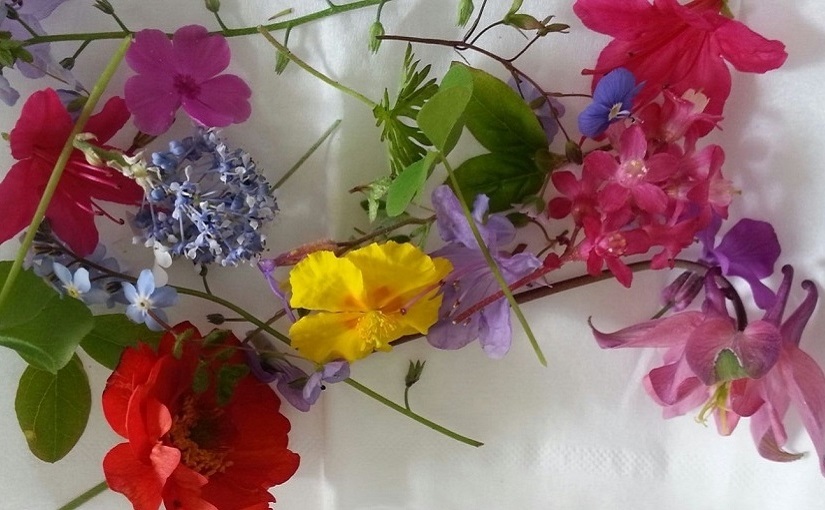
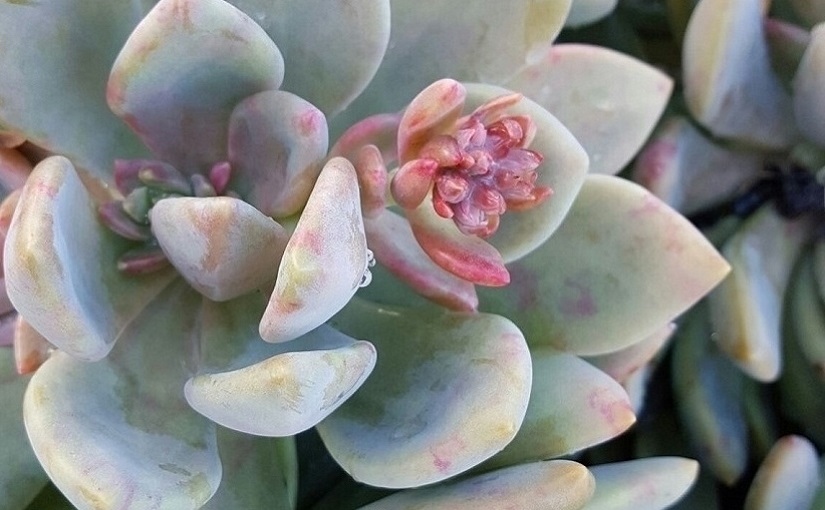
Often in life I look to the natural world as a metaphor of sorts to understand the way things are and how they relate. This is the inclination behind much of the photography that’s accompanied my posts so far: the beauty of forms and colours, the processes of growth, the wisdom behind the seasons and relationships of nature. So I’ve planned a few posts to address this more directly, for those so inclined to join me.

To me, there’s an inherent power and truth in nature – the consistency of the days, the seasons, the years; the honesty and beauty of the markers of time, be that cherry blossom, falling leaves, or holly; the social rhythms and cultural traditions accompanying the changes in nature; the amazing truth that our day-to-day realities are as they are because of the movements of an almost unimaginable planetary reality. We might complain about the weather or the seasons, but we exist within this incredibly complex system of warmth and cold, light and dark that shapes our daily lives and the nature we see around us.

Equally how we look at that, how we talk about it, the extent to which we acknowledge and tend it interests me greatly. Often I find people dismissive of my wonder at nature – “it’s just the position of the sun when it rains”. I’m not sure where that arises, maybe because we can understand things on a material level we then tend to reduce phenomena entirely to that knowledge? Maybe there is little place for wonder and beauty in a rational society, or more that we struggle to reconcile the two perspectives.

It’s funny how we complain about weather on a pretty personal, short-term basis – as if the winter were here merely for our inconvenience and discomfort, and the British summer mainly to exercise our capacity for disappointment. But surely the life of the planet depends upon this alternation of seasons and the ways in which that supports and manages ecosystems. And psychologically, if we weren’t cold would we appreciate warmth so much? The processes of alternation and change seem fundamental to human nature in a way.

As mentioned in Animals in human society, I wonder at the full degree to which our ways of living are built upon the assistance of animals and also of plants – the natural world as a whole. In some way we’ve risen above nature and maybe because of it, yet we’ve become somewhat dismissive of that because we understand it and we seem to view it as a resource, an inconvenience or a pretty backdrop.

So much in life seems to echo this experience of rhythms, transformation, and the tension and balance of opposites. Later I’ll look more at the place of nature within society, so this simply sets the scene for now.

Ways to share this: